
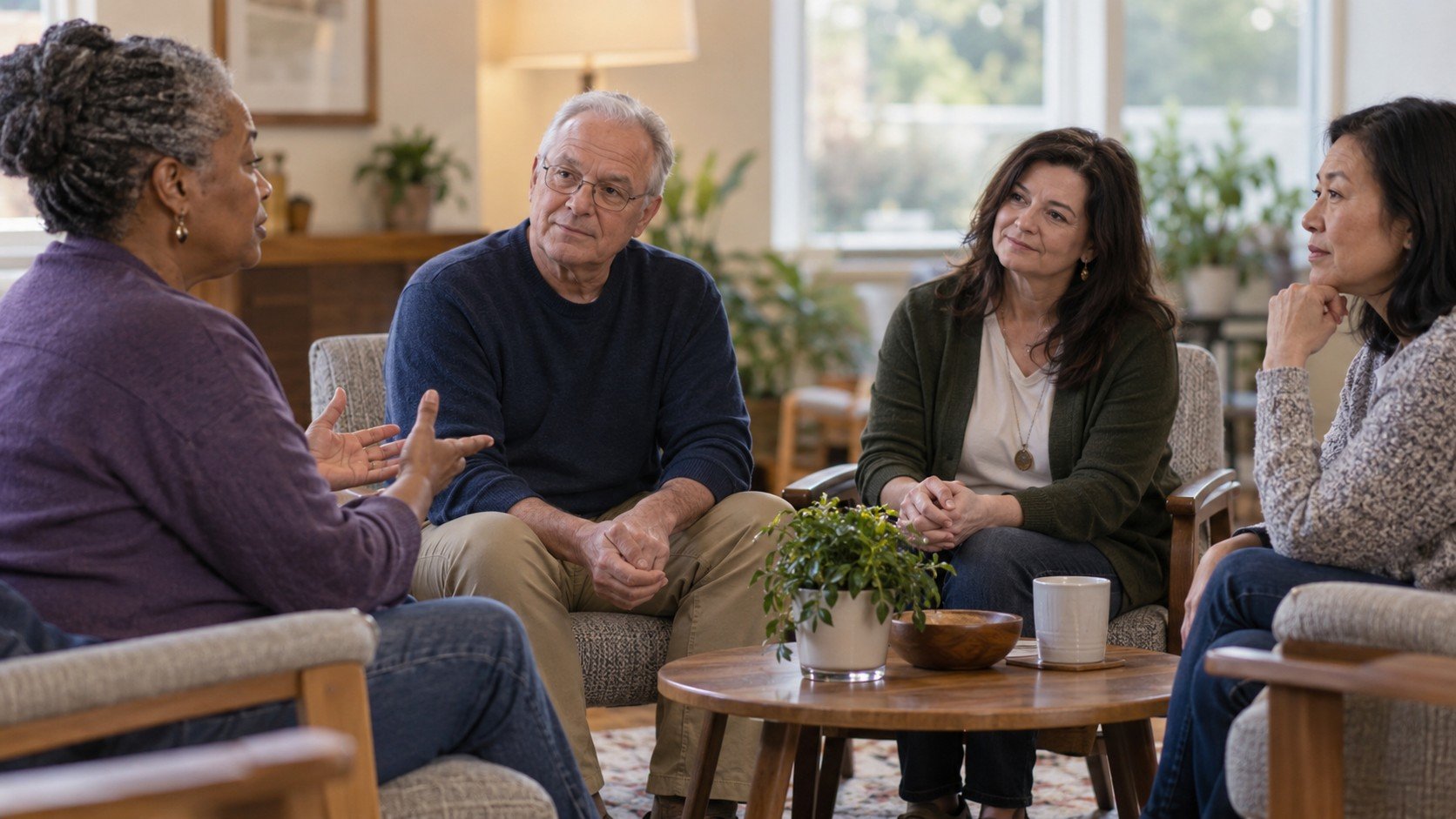
Caring for a loved one with dementia can feel isolating, even when family members and friends are willing to help. Daily caregiving may involve changes in communication, difficult behavior, questions about symptoms, or uncertainty after a diagnosis. These experiences can be hard to explain to someone who has not faced them personally.
Caregiver support groups connect family caregivers with people managing similar challenges. They provide a private setting where caregivers can discuss their feelings, learn from one another, and receive practical advice without judgment.
Find Local Caregiver Support Groups in Waukesha County
Families can find dementia caregiver support groups in several communities throughout Waukesha County. Some welcome anyone caring for an aging loved one, while others focus on people supporting someone with Alzheimer’s disease or other dementias. Reviewing who each group serves can help caregivers choose one where the conversations are relevant to their experiences.
The Aging and Disability Resource Center of Waukesha County provides information about these local options. Their dementia care website includes caregiver resources and information about available support groups. Since meeting schedules and arrangements may change, families should consult the website or contact the listed organizer before attending.
Statewide and online groups are also available when local meetings do not match a caregiver’s schedule or needs.
Connect With the Alzheimer's Association for Additional Support
The Alzheimer's Association Wisconsin Chapter offers caregiver support groups for unpaid family members and friends caring for someone with Alzheimer's disease or another form of dementia. Meetings may be facilitated in person or online.
These groups give caregivers access to trained facilitators and other members who understand the demands of dementia care. Conversations may address changing care needs, family communication, decisions about the future, or ways to protect a caregiver’s quality of life.
The organization also offers ALZConnected, a free online community for people living with dementia and those who care for them. Members can ask questions, join topic-based discussions, and connect with other caregivers at a convenient time. This can be helpful for anyone who cannot regularly leave a loved one alone or attend scheduled events.
Choose a Support Group That Meets Your Needs
The right group depends on what kind of support would be most useful. A caregiver who wants to share personal experiences may prefer a peer-led discussion. Someone looking for education about different types of dementia may benefit from a meeting facilitated by trained professionals.
Before joining, ask whether the program is intended for caregivers only or whether the person receiving care may attend. It is also helpful to confirm whether discussions are confidential and whether registration is required.
Caregivers do not need to speak during their first meeting. Listening can provide useful guidance while allowing time to become comfortable with the group. When they are ready, participants can raise specific concerns and learn how other families have approached similar situations.
The Difference Between Support Groups and Memory Cafés
Memory cafés serve a different purpose from caregiver support groups. They are social programs for individuals living with early memory loss and the care partners who accompany them. Activities focus on connection and shared enjoyment rather than private caregiving discussions.
The Library Memory Project works with public libraries across Waukesha County. Their mission is to provide programs for people affected by memory loss, Alzheimer's disease, and other forms of dementia. Families can visit the Library Memory Project website to explore participating libraries and upcoming events.
A memory café may suit families who want an activity they can attend together. A caregiver group is usually more appropriate when someone needs space to discuss stress or changing responsibilities openly. Caregivers may choose either option based on their current needs.
Seek More Assistance When a Support Group Is Not Enough
Peer support can make caregiving feel less isolating, but it cannot replace hands-on assistance when a loved one’s needs become difficult to manage at home. If daily care is affecting a caregiver’s health or ability to meet other responsibilities, it may be time to consider respite care or a memory care community.
Memory care communities provide consistent support in an environment created around the needs of people living with dementia. Families can remain closely involved in their loved one’s life while trained caregivers manage personal care and daily routines.
At Lakewood Memory Care and Assisted Living in Brookfield, Wisconsin, residents receive person-centered care based on their individual needs and lifelong routines. Lakewood also offers short-term respite stays, giving family caregivers time to rest while their loved one receives personalized care in a secure, welcoming community.
Let the Right Support Ease the Caregiving Journey
Caregiver support groups give families a place to speak openly with people who understand the realities of dementia care. Finding the right group can make it easier to work through difficult feelings, learn from shared experiences, and identify helpful local resources.
If your loved one needs more consistent support than you can provide at home, contact Lakewood Memory Care and Assisted Living today to schedule a tour. Our team can answer your questions and help you determine whether our Brookfield community is the right fit for your family.
Frequently Asked Questions
1. How can the Aging and Disability Resource Center help me find a support group?
The aging and disability resource center is a central point of access for adults aged 60 and older, adults with a disability, and their caregivers. Staff can identify current county programs, explain supportive services, and provide contact information for local groups.
2. When should I contact a dementia care specialist?
A dementia care specialist can assist when a person experiences changes in memory, cognition, behavior, or communication. The specialist can provide education about dementia and help families plan for future needs.
3. Can care partners attend caregiver support groups together?
Policies differ between programs. Some groups are only for unpaid caregivers, while early-stage programs may welcome care partners and individuals living with dementia together. Contact the facilitator before attending to confirm who may participate.
4. Are Alzheimer's disease support groups only for people with Alzheimer’s?
Some groups support caregivers of people with Alzheimer's disease, while others also welcome those caring for someone with another dementia or a related disorder. The group description should explain who the program serves.
5. What other dementia education resources may be available in Waukesha County?
Other county resources may include community memory screenings, caregiver training, and education about dementia and brain health. A screening may help identify possible changes in memory, but it does not provide a diagnosis. Families with concerns should speak with an appropriate healthcare professional.