
Helping grandchildren understand a loved one's memory loss begins with an honest explanation and reassurance that the relationship still matters. This guide is for parents and other family members preparing children for changes in a grandparent with dementia.
It explains what to say, how visits can remain meaningful, and when extra support may help. Uncertainty can feel overwhelming, especially when a child does not understand changes in a loved one’s behavior. They may blame themselves or feel afraid. Clear, reassuring explanations can help them feel safer and more prepared for what to expect.
Explaining Dementia to Kids With Age-Appropriate Language
Start the conversation in a calm moment and use age appropriate language. You might say, “Grandpa has a disease that changes how his brain works.”
Explain that dementia is not just memory loss. It can affect thinking, emotions, behavior, and eventually how a person's body functions. Make clear that nobody caused these changes and that the disease is not anyone’s fault.
If a child asks why this is happening, explain that damaged brain cells can change how someone thinks and remembers. Some children may also ask why people develop Alzheimer’s disease. Reassure them that not everyone develops dementia with age, then pause and allow their questions to guide the explanation.
Helping Younger Children Make Sense of Memory Problems
Younger children often understand memory problems more easily through situations they can see. Explain that their loved one may forget things, use the wrong name, or ask the same question repeatedly.
You could say, “Grandma has trouble remembering things that happened minutes ago.” However, people with dementia may still remember events that happened years ago. This simple explanation helps the child connect the changes to familiar experiences.
You might then add, “Your grandfather's brain is having difficulty helping him remember things.” Ask what the child thinks is happening so you can check their understanding and gently correct any confusion.
Talking With Older Children About Alzheimer’s Disease
Older children may want fuller explanations about their grandparent’s condition. Clarify that Alzheimer’s disease is one cause of dementia, while other forms can affect the brain differently. Discuss dementia symptoms honestly, including confusion, difficulty finding words, and behavioral changes. Explain that the process is different for each person, so adults cannot predict every change.
They may ask how the disease could affect their grandparent over time. Explain that symptoms usually develop gradually, although most people experience the condition differently. Answer each question honestly while keeping the explanation appropriate for their age.
Setting Realistic Expectations Before a Visit
Prepare children before they spend time with their grandparent. Describe current changes plainly, including repeated stories or moments when the person thinks they are elsewhere.
Explain that a wrong name does not erase the relationship. The loved one may feel confused or tired. These possibilities give children realistic expectations for the visit. Keep early visits manageable and allow breaks. A familiar adult should remain nearby and notice discomfort. Never place responsibility for the care process on a child.
Communicating About Dementia During Difficult Moments
Show children how to respond without correcting every mistake. If Grandpa says something happened yesterday when it occurred long ago, the child can acknowledge the feelings behind his story. If he repeats the same question, offer a brief answer or gently shift the focus. A calm voice can preserve comfort in the moment. Once the situation has settled, remind kids that the behavior comes from changes in how the brain works. Adults should step in if the interaction becomes upsetting or unsafe.
Activities for Connection and Positive Interactions
Shared activities create opportunities for connection when talking becomes difficult. Choose something familiar that matches the resident’s interests and current abilities.
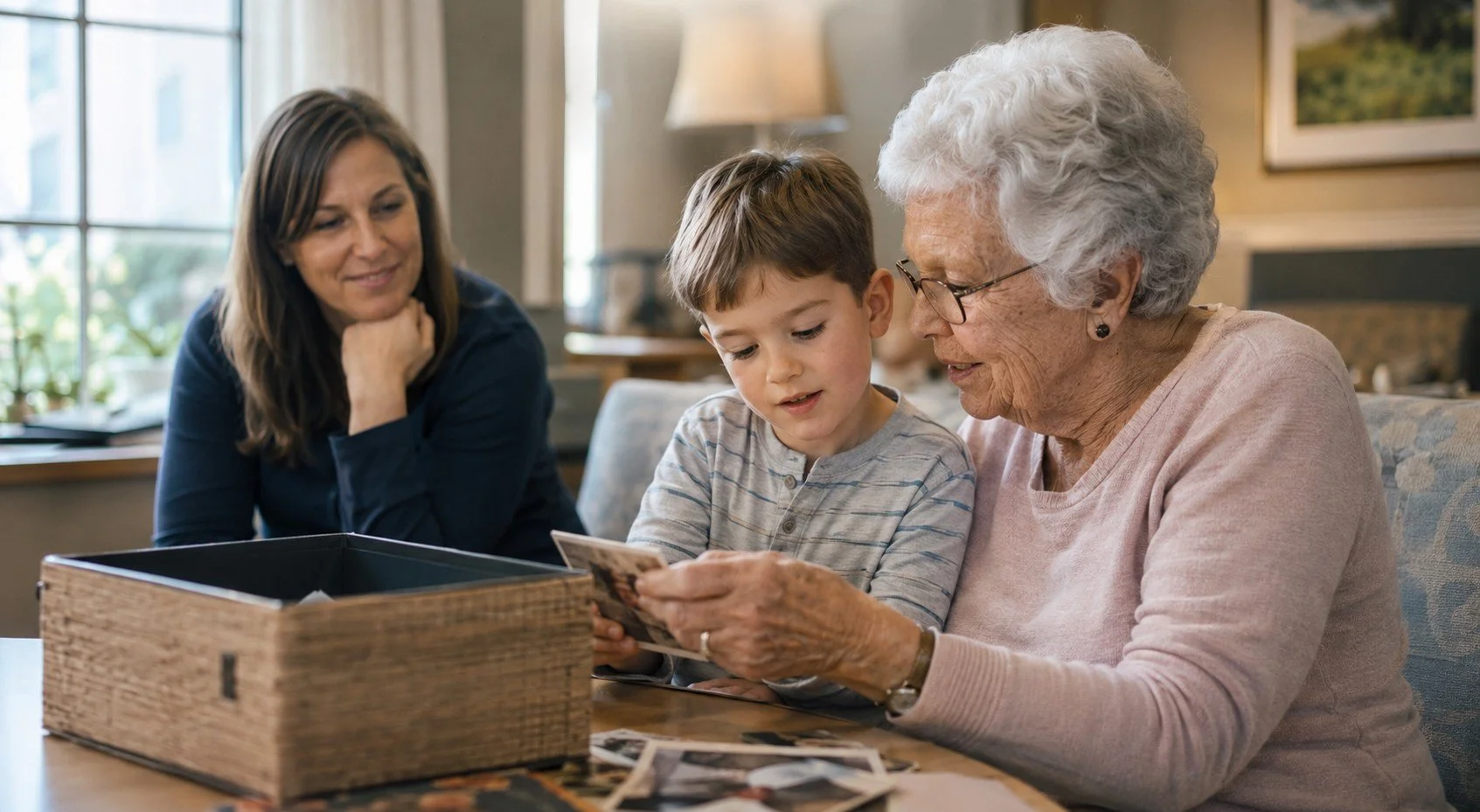
A child and their grandparent might decorate a memory box together using family photographs. Other positive interactions could include watering plants or completing a simple puzzle together.
Let the person set the pace and stop when attention fades. The goal is to spend time together. Even if the grandparent does not remember the activity later, the comfort and connection shared in that moment still matter.
Supporting Children’s Emotions Across the Entire Family
Children may feel sad as they notice changes in their grandparent or miss familiar parts of their relationship. Some may feel uncertain or afraid about what the disease could change next. These emotions are normal, so keep communication open and encourage questions.
When a child expresses feelings, listen first. Ask what worries them and confirm that adults are responsible for care. Watch for sleep problems, withdrawal from friends, or persistent anxiety. A counsellor or paediatrician can help when a child needs enough support to process what is happening.
Finding Resources and Support Groups
Trusted dementia resources can reinforce understanding in an age appropriate way. Choose material suited to the child’s reading level and review it first.
Support groups may help parents learn how other families handle visits. Some programs offer dedicated resources for children or teenagers affected by a relative’s diagnosis.
Share guidance with teachers or trusted adults when appropriate. Consistent explanations help the entire family respond with patience while protecting everyone’s privacy.
Helping Family Members Stay Connected at Lakewood
A memory care community supports people living with dementia through daily routines, familiar activities, and care that respects each person’s needs. At Lakewood Memory Care and Assisted Living in Brookfield, family connection remains an important part of that support.
Visits can feel more comfortable when families choose simple, familiar ways to spend time together. Lakewood’s Montessori-based memory care program honours each loved one’s life experiences, interests, and abilities. Gardening, nature projects, community events, and therapy dog visits may give grandchildren gentle ways to connect.
Lakewood team members can suggest simple activities that feel comfortable for both the loved one and the child. This may help parents guide the visit while allowing the family to share relaxed, meaningful time together.
Moving Forward With Understanding and Support
Memory loss can change familiar conversations, yet grandchildren can still share meaningful moments with someone they love. Honest explanations help children understand the disease and express their feelings safely. Continue revisiting the subject as questions arise. A child’s understanding changes with age and experience, so each conversation can meet current needs.
Lakewood supports residents and families through person-centred care in a welcoming community. Get in touch with Lakewood Memory Care and Assisted Living to schedule a tour and learn how we support family connection.