
How Is Memory Care Different from In-Home Caregiving?
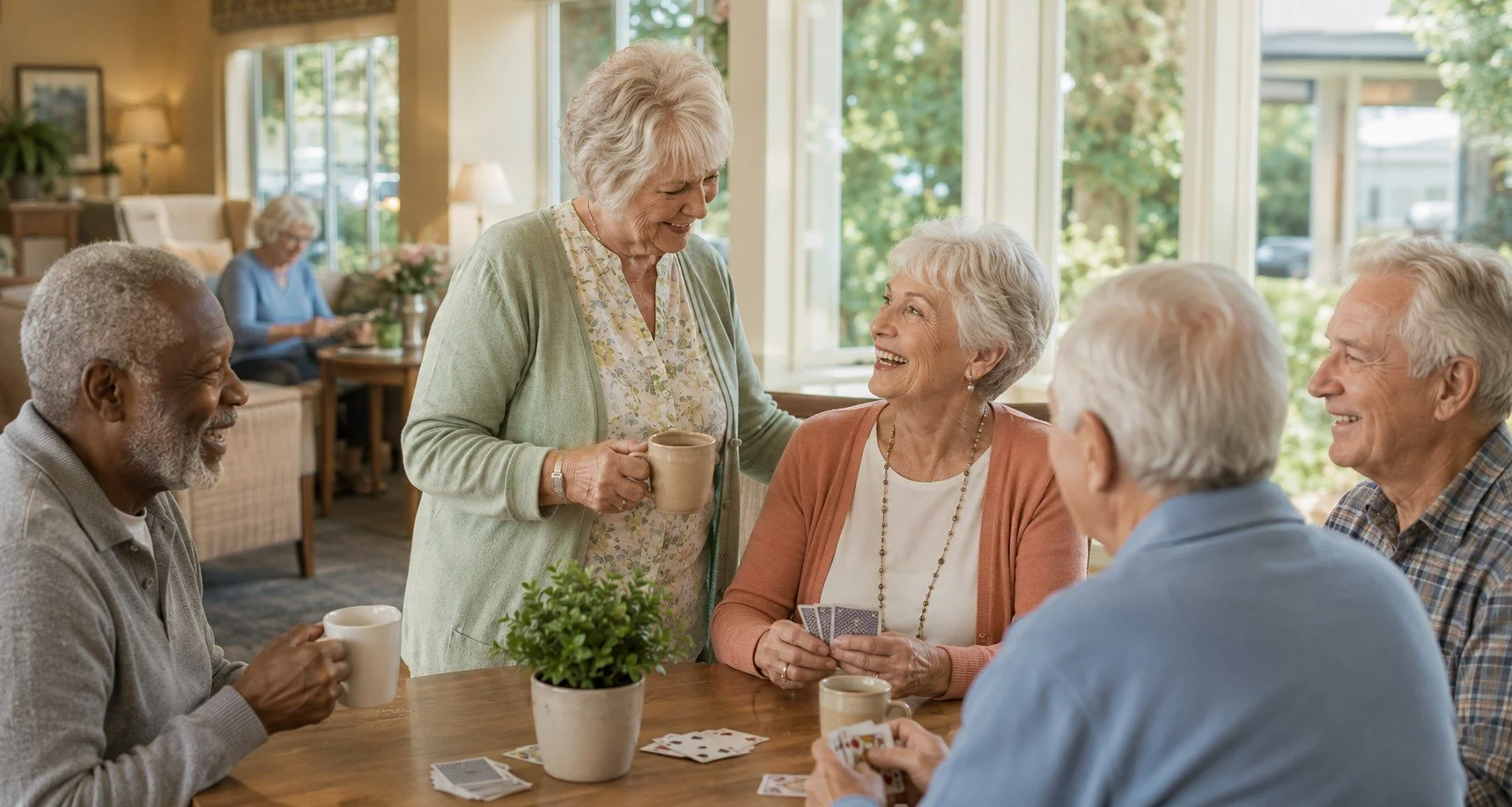
Memory care vs. in-home care comes down to setting, structure, supervision, training, safety, and daily support. In-home caregiving brings support into a person’s own home, often for a few hours or longer stretches. Memory care provides a supportive environment where residents receive consistent dementia care and meaningful engagement.
This article is for family members comparing care options for a loved one with memory loss, Alzheimer's disease, or another form of cognitive impairment. It explains the key differences clearly, including cost, safety, activities, care levels, and staff support. Understanding these details can help many families make an informed decision during an emotional process.
Why Families Compare Memory Care vs. In-Home Care
Many families first consider care at home because it feels familiar. A loved one may stay in the same house, sleep in a familiar bedroom, and keep close contact with other family members.
In-home care may include personal care, meal preparation, reminders, light housekeeping, and homemaker services. Some families hire a care aide for a few hours each day. Others arrange multiple caregivers for longer coverage.
This can work well in the early stages of dementia. Over time, needs may change. As dementia progresses, families may notice more confusion, nighttime restlessness, wandering, or trouble with daily living tasks.
How Memory Care Communities Support Residents with Alzheimer's Disease
Memory care communities provide specialized care for people living with Alzheimer’s disease and other forms of dementia. Care is not limited to support with tasks. It also includes structure, routine, emotional support, and a safer daily rhythm.
At Lakewood Memory Care and Assisted Living in Brookfield, Wisconsin, residents receive individual-centred support in a secure, welcoming community. The approach honours each resident’s routines, abilities, and preferences.
Lakewood’s holistic memory care program uses Montessori principles to support physical engagement, spiritual support, sensory stimulation, social connection, intellectual discovery, and emotional expression. This helps residents feel known, not simply managed.
Key Differences in Level of Care and Daily Support
In-home caregiving can be flexible. Families may tailor caregiving tasks around bathing, dressing, meals, medication reminders, or companionship. This support can feel personal, especially when needs are still predictable.
Memory care provides a fuller daily care structure. Caregiving staff help residents with bathing, grooming, dressing, oral care, mobility, meals, and medication management. Round-the-clock care helps ensure support is available whenever residents need it.
A memory care unit also helps families who cannot safely provide full time supervision at home. This matters when a loved one needs frequent redirection or support responding to confusion.
Environment and Safety
Home can be adapted with safety modifications, grab bars, better lighting, locked cabinets, and accessibility features. These changes may reduce some risks, but they do not remove every concern. Memory care offers a purpose built setting where safety is part of everyday life. A secure environment may include controlled access, clear walking routes, and calmer spaces that reduce confusion.
Lakewood offers a walkable community with paths, garden plots, and outdoor spaces that promote natural activity. These specially designed paths support movement in a safe environment. Wandering safety modifications help protect residents who may walk with purpose but lose their way.
Staff Training and Supervision
A family caregiver or in-home care aide may know a loved one deeply. That personal history is valuable and should remain part of care. Still, dementia can bring confusion, agitation, or emotional distress that feels hard to manage without training.
In-home caregivers can help with daily support, but training and supervision may vary by provider. Memory care communities train caregiving staff to understand dementia, communication changes, and safety needs. Regulations require caregiving staff to follow care standards and safety procedures.
Families may also ask about the staff-to-resident ratio when touring. Lakewood also offers 24/7 on-call nursing support, health monitoring, and medication management.
Cost Comparison and Care Planning
In-home care costs often depend on hours used, the type of support needed, and how often caregivers visit. Short visits may cost less at first. Longer coverage can become more expensive when care is needed across weekends or overnight.
Memory care usually has a monthly rate that includes housing, care support, meals, housekeeping, laundry, maintenance, programs, and community amenities. Costs can change, so families should speak with the community directly. The right choice depends on care needs, safety, budget, and quality of life.
Amenities and Activities in Memory Care Communities
At home, activities often depend on caregiver availability and resources. A loved one may become socially isolated if visits are limited or outings become difficult.
Memory care communities offer regular activities, social spaces, meals, and structured engagement. Lakewood residents may enjoy social hours, gardening, workshops, meditation, sensory activities, and life enrichment programs.
These experiences support mental health and help residents connect with people their own age. For many seniors, meaningful activity is not only a luxury. It can support mood and a stronger sense of belonging.
Choosing Care Options for Your Loved One
Choosing between home care and memory care is not only practical. It can touch guilt, grief, love, worry, and hope all at once. The best starting point is your loved one’s daily reality. Look at safety, loneliness, caregiver stress, nutrition, hygiene, medication routines, and nighttime needs.
Also consider how much support family caregivers can provide without harming their own well-being. Both memory care and in-home care can serve a meaningful purpose. The right fit may change as symptoms and care needs shift.
Finding Support That Fits Your Loved One’s Needs
Lakewood Memory Care and Assisted Living in Brookfield offers a secure and supportive community for older adults living with memory-related changes. Residents receive individual-centred care, personal support, engaging programs, and comfort in a recently renovated setting.
Families do not have to carry every decision alone. A tour can help you see the living spaces, ask detailed questions, and picture what daily life may feel like for your loved one. If you are exploring memory care in Brookfield, Wisconsin, get in touch with Lakewood today to schedule a tour.
Frequently Asked Questions
1. What resources does the Alzheimer's Association offer families?
The Alzheimer's Association offers education, care planning tools, support groups, a 24/7 helpline, and information about dementia symptoms, safety, and long-term care options.
2. Can dementia care include a private room?
Yes, many communities offer a private room or private suite options. Lakewood offers private living spaces where residents can add familiar personal touches.
3. When should families consider additional support?
Families may need additional support when a loved one's needs become harder to manage safely at home. Signs may include wandering, missed medications, poor nutrition, isolation, or caregiver exhaustion.
4. What is the difference between a memory care community and a nursing home?
Memory care supports people living with Alzheimer’s disease, dementia, or memory loss in a secure community setting. A nursing home usually supports people who need ongoing skilled nursing care or more complex medical oversight.
5. Can residents receive physical therapy in memory care?
Some residents may receive physical therapy through outside providers while living in memory care. This may include visits from physical therapists or support with certain medical needs. Families should ask what the community provides directly and what outside healthcare professionals can provide on-site.