
Our Top 5 Sensory Activities for Residents with Dementia
When someone you love receives a dementia diagnosis, everything can feel uncertain. You begin to look at daily life differently. You wonder how to protect their independence, how to preserve their identity, and how to nurture their emotional well-being as cognitive decline unfolds. At Lakewood in Brookfield, Wisconsin, we are an assisted living community specializing in memory care, and we understand how deeply personal this journey is for every parent, spouse, and family member.
We believe that meaningful sensory activities for residents with dementia are not simply additions to the day. They are essential tools that support cognitive function, communication skills, and overall well-being. Through compassionate, person-centered care and intentional sensory stimulation activities, we help residents experience comfort and connection as the disease progresses.
Below, we share our top five sensory activities for residents with dementia and how they support our residents at every stage, including late stage dementia.
1. Calming Sensory Experiences That Support Residents with Dementia
Many individuals living with dementia experience periods of anxiety, restlessness, or confusion. Creating calming sensory experiences throughout the day can help provide reassurance and emotional comfort.
Simple sensory elements such as soft lighting, gentle music, and familiar scents can have a powerful grounding effect. These types of experiences help residents slow down, relax, and reconnect with their surroundings.
Tactile experiences also play an important role. Warm towels, textured fabrics, and comforting hand care can provide soothing tactile stimulation. For residents who may find verbal communication more difficult, these sensory moments offer another way to feel understood and supported.
At Lakewood, these calming experiences are always guided by our person-centered approach to care. Each resident’s preferences, comfort level, and life history are considered so that sensory engagement feels familiar rather than overwhelming.
2. Creative Activities that Encourage Expression and Social Interaction
Creative activities offer meaningful mental stimulation while allowing residents with dementia to express themselves without pressure. At Lakewood, these experiences include art sessions, nature crafts, devotional readings, and poetry programming designed to engage the senses and encourage creativity.
We are also proud to partner with The Arts of Aging, which provides creative programming designed specifically for older adults. Their work focuses on process-based art rooted in Montessori principles, meaning residents are encouraged to explore colors, textures, imagery, and storytelling in ways that feel comfortable and engaging rather than focused on a final product.
Our poetry programming is a particularly meaningful part of this creative engagement. Guided sessions invite residents to reflect on memories, emotions, and life experiences through shared words and conversation. Even for residents who may find everyday communication more difficult, poetry can provide a gentle and creative way to express thoughts and connect with others.
Sitting together during these creative sessions naturally encourages social interaction. Residents share stories, laugh together, and reflect on familiar experiences. These shared moments can evoke positive emotions while creating a sense of connection and belonging within the community.
3. Music Therapy and Familiar Songs That Bring Comfort and Enhance Mood
Music is one of the most powerful ways to reach residents living with dementia. At Lakewood, residents benefit from biweekly music therapy sessions with a licensed music therapist, who uses personalized music experiences to support memory, emotional expression, and relaxation. Even in late stage dementia, music often remains deeply accessible. Familiar songs can unlock comforting memories and stimulate memory in ways few other approaches can.
These structured therapy sessions complement the many musical moments already incorporated into daily life in our community, including musical hymns, dance socials, and group sing-alongs. Soothing music provides a calming effect, while uplifting rhythms enhance mood and encourage gentle movement.
Music sessions also provide meaningful moments for loved ones. A family member joining in to sing a cherished song can spark happy memories and emotional connection. For some, singing familiar lyrics supports improving communication skills and cognitive abilities even when everyday conversation becomes more difficult.
Music therapy is not simply entertainment. It is a deeply therapeutic activity that supports emotional well-being and reduces anxiety in a natural and dignified way.
4. Gentle Exercise and Nature Sounds That Support Physical Activity and Well-Being
Maintaining physical activity is essential for supporting both physical abilities and cognitive function. In our walkable community with garden paths and outdoor spaces, residents enjoy gentle exercise in a secure and nurturing setting.
Activities for seniors such as armchair yoga, strength training, courtyard ball toss, gardening, and tai chi inspired movement encourage safe, supportive engagement. These forms of gentle exercise help preserve mobility and promote relaxation without causing strain.
Spending time outdoors introduces additional sensory experiences. Bird watching, tending to fresh flowers, and spending time near our on-site aviary create peaceful sensory moments for residents. Observing birds both in the wild and within the aviary offers gentle visual and auditory stimulation that many residents find calming and engaging. Nature sounds and exposure to soothing nature can reduce anxiety and enhance mood for seniors living with dementia.
These natural sensory stimulation activities also stimulate memory. The scent of blooming flowers or the sight of birds in motion may spark comforting memories from earlier chapters of life. Engaging in physical activity outdoors supports mental stimulation while reinforcing a sense of peace and stability.
5. Memory Box and Sensory Boards That Stimulate Memory and Encourage Communication
A memory box is a deeply personal and meaningful tool within sensory activities for dementia. Filled with photographs, keepsakes, and familiar objects, it can bring forward positive and happy memories that reinforce identity.
For a parent, spouse, or family member navigating Alzheimer’s disease, touching and seeing treasured items can spark conversation and encourage communication. These objects provide tactile stimulation while strengthening a sense of self.
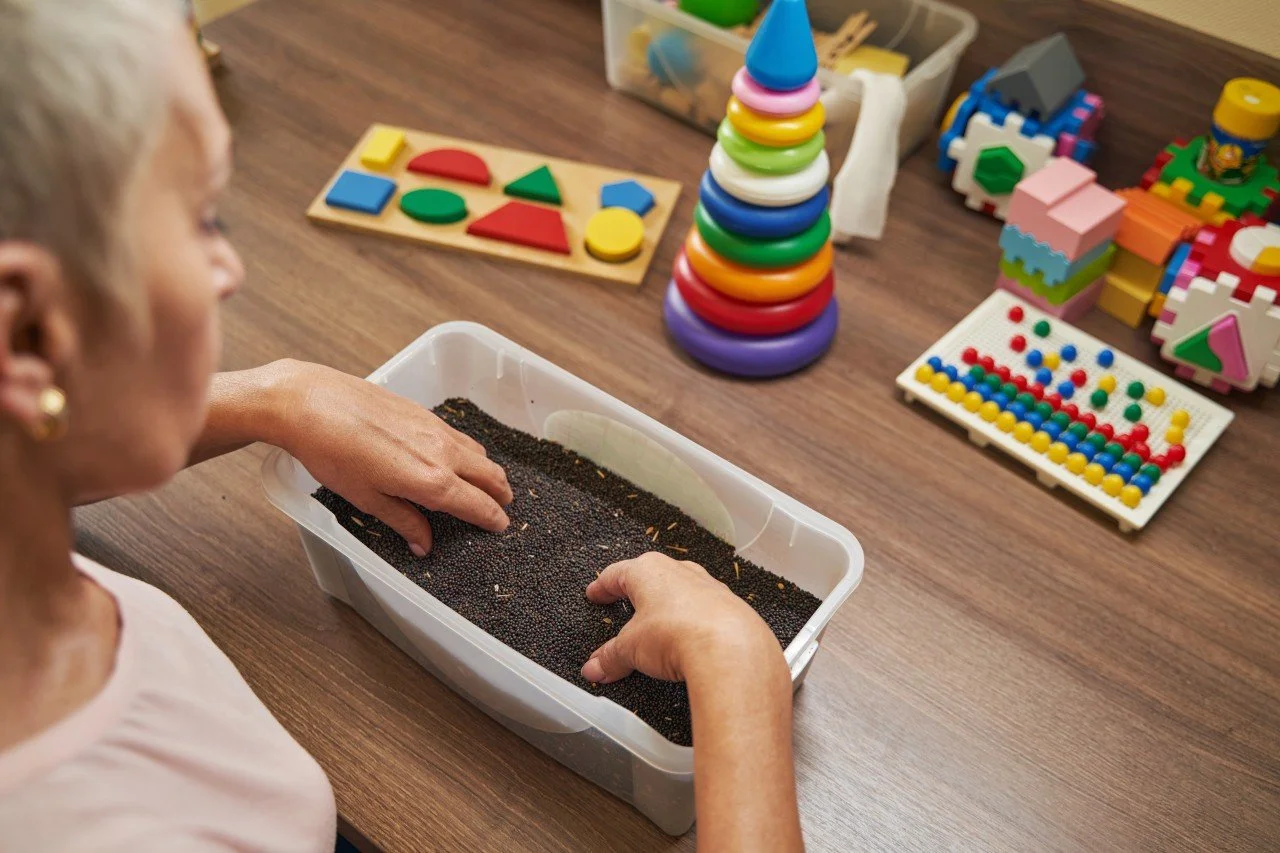
Sensory boards offer additional tactile stimulation through various textures, buttons, fabrics, and interactive components. These tactile materials are especially helpful for individuals in late stage dementia who may benefit from repetitive, soothing movement.
Memory boxes and sensory boards are often incorporated into group activities or personalized sessions with a community assistant. They offer stimulating activities that support cognitive function without requiring complicated instructions. As the disease progresses, these simple yet powerful tools continue to nurture emotional well-being.
Creating a Calming Atmosphere in Senior Living Communities
In senior living communities that prioritize memory support, the environment itself becomes part of the therapeutic approach. A calming atmosphere, consistent daily routines, and person-centered care reduce confusion and build trust.
Our holistic memory care program integrates sensory stimulation, intellectual discovery, social connections, and emotional expression. From meditation sessions and engaging social hours to therapy dog visits, bingo, and group outings, residents experience a range of sensory experiences designed to stimulate memory and promote well-being.
As an assisted living community specializing in memory care, we are intentional about creating an environment that supports each individual’s perspective specialties, lifetime routines, and evolving needs.
Discover Compassionate Sensory Activities for Residents with Dementia
Sensory activities for residents living with dementia are about far more than filling time. They are about preserving identity, encouraging communication, and enhancing mood through therapeutic activities that nurture the whole person.
At Lakewood, we combine creative activities, music therapy, gentle exercise, bird watching, memory box sessions, and engaging group activities to support cognitive function, emotional well-being, and meaningful social interaction each day.
If you are exploring options for a loved one, we invite you to experience our welcoming senior community in Brookfield for yourself. Contact us today to schedule a personal tour and discover how Lakewood can provide compassionate, customized care that truly honors your loved one’s journey.
Frequently Asked Questions
How do sensory activities help reduce anxiety in older adults living with dementia?
Sensory stimulation activities engage the five senses in calming ways that promote relaxation. Familiar scents, soothing music, and tactile stimulation can create a calming effect that reduces anxiety and agitation, particularly for those living with Alzheimer’s disease.
Are sensory activities appropriate for someone in late stage dementia?
Yes. Sensory activities for dementia can be adapted to every stage. In late stage dementia, simple tactile materials, familiar songs, and soothing nature sounds often remain deeply meaningful and accessible.
How do group activities benefit cognitive abilities?
Group activities encourage social interaction, mental stimulation, and communication skills. Activities such as bingo, cooking, and happy hour music activities can enhance mood while supporting cognitive function in a supportive environment.
Can family members participate in sensory experiences?
Absolutely. A family member can join music sessions, help create a memory box, or participate in bird watching and gentle exercise. Shared experiences often evoke positive memories and strengthen emotional bonds.
What makes sensory activities different from other activities for seniors?
Sensory activities for residents with dementia intentionally focus on engaging sensory experiences to support cognitive and physical abilities, emotional well-being, and meaningful connection. They are therapeutic activities designed to nurture the whole person with dignity and compassion.