
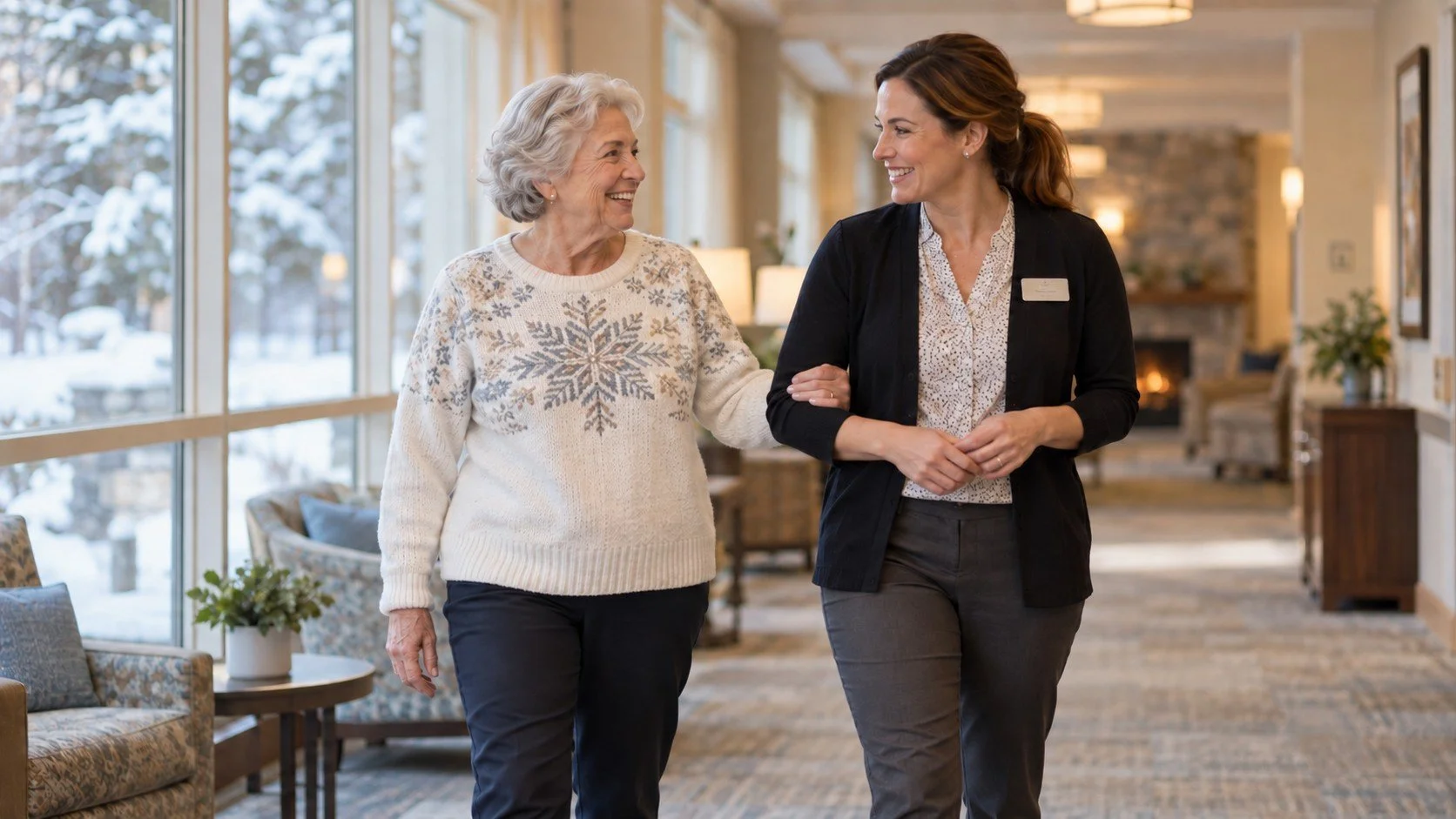
Wandering can happen during any season, but dementia wandering in winter carries greater urgency. A person with dementia may leave the house without recognizing the danger of cold weather, wear unsuitable clothing, or become lost in surroundings changed by snow.
In Wisconsin, freezing temperatures can quickly lead to a dangerous loss of body heat. Shorter days and reduced visibility can also make it harder to locate someone. Understanding these added dangers allows family caregivers to take steps to reduce wandering risks and keep a loved one safer throughout winter.
Why Dementia Wandering in Winter Becomes More Dangerous
Winter creates immediate physical dangers for a person with dementia who wanders outdoors. Snow and ice can make sidewalks or driveways slippery, increasing the risk of a fall. If the person is injured, confused, or unable to stand, they may remain exposed to colder temperatures until help arrives.
A person may also forget how long they have been outside or have difficulty finding their way back from familiar places. Changes in cognitive function may affect a person’s ability to decide where or when to seek help, even when they feel cold. Dressing appropriately for the weather is therefore important, and caregivers can check that the person is wearing warm clothing before they go outdoors.
Even with suitable clothing, remaining outside for too long can cause the body to lose heat and may lead to hypothermia. Cold exposure can also place strain on the body and worsen existing health conditions. These dangers make wandering especially concerning during the winter months.
How Cold Winter Weather Can Become an Emergency
The body loses heat when exposure continues longer than it can keep itself warm. Wet clothing and strong wind can make this happen faster, particularly during extreme weather.
A person living with Alzheimer’s disease may not communicate discomfort clearly. They could continue walking outdoors despite numb hands or wet clothing. They may also resist going inside because they do not understand the danger.
Early hypothermia warning signs can include shivering, unusual tiredness, poor coordination, or worsening confusion. Shivering may stop as the condition becomes more serious. Family members should act quickly and seek emergency medical help rather than waiting for the person to recover indoors.
Notice How Winter Affects an Older Adult Living With Dementia
Seasonal changes may affect familiar daily patterns for some people with dementia. Less sunlight can make late afternoon feel closer to night, while darker mornings may make it less clear when the day should begin.
These seasonal changes may contribute to difficulty sleeping or make usual sleeping patterns less predictable. If someone wakes earlier than usual, they may begin following a familiar morning routine, such as getting dressed or looking for their car keys. Keeping rooms comfortably lit and offering gentle reminders can help the day feel more familiar.
Canceled outings during bad weather can also cause restlessness. Someone who usually takes a daily walk may feel bored or feel anxious when that activity suddenly stops. Wandering may then reflect a need for movement or an attempt to continue a familiar responsibility.
How Family Caregivers Can Recognize Wandering Signs
Wandering often begins with changes that caregivers can observe. The person may pace near an exit or repeatedly say that they need to go home. They might gather their belongings or put on a coat at an unusual time.
The common reasons behind these behaviors are not always obvious. Someone may be looking for another person or trying to complete a responsibility remembered from earlier life. Physical discomfort can also make the person restless.
Respond calmly and try to identify the need behind the behavior. Correcting or arguing may increase anxiety. A familiar activity or reassuring conversation may help the person settle without making them feel restricted.
Create a Safety Plan for a Person With Memory Loss
A practical safety plan should reflect the person’s habits and known risk factors. Once caregivers understand when wandering is more likely to occur, they can introduce the following precautions around the home:
Installing door alarms or motion sensors can alert caregivers when someone approaches an exit.
Safety gates can restrict access to unsafe areas without blocking emergency routes.
Visual cues can help the person find familiar rooms or complete simple tasks, such as locating the bathroom.
The person can wear an ID bracelet, while caregivers keep a recent photo ready to share with first responders.
These measures can create a safe environment while allowing the person to move around with greater independence.
Give People Living With Dementia Safe Opportunities to Move
Preventing wandering does not mean stopping all movement. People living with dementia may walk because they need exercise or find movement calming.
When the weather permits, supervised use of clear walking paths can provide a safer outlet. Appropriate footwear and comfortable layers can help the person stay warm and safe. Outdoor time should be avoided when ice or severe winter weather makes walking unsafe.
Lakewood Memory Care and Assisted Living in Brookfield offers a walkable community with paths and a large courtyard that encourages natural activity. Our person-centered dementia care approach follows each resident’s lifelong routine, helping movement remain part of daily life within a secure and supportive setting.
Act Quickly When Someone Is Missing in Cold Weather
Treat an unexplained absence as an emergency, especially in cold winter weather. Check the immediate area and contact emergency services without delaying the report.
Explain that the missing individual has dementia and share the recent photo. Provide their clothing description and likely destinations. A text message may not be seen immediately, so calling nearby relatives is more appropriate during an emergency. Someone should also remain available to speak with emergency personnel.
Once the person is found, check for wet clothing and hypothermia signs. Seek immediate medical care if they are unusually sleepy, unsteady, or more confused than normal.
Find Winter Support for Your Loved One
Repeated wandering or nighttime exit attempts can become difficult to manage at home. Specialized memory care can provide consistent support when weather-related dangers add to existing safety concerns.
Lakewood offers individual-centered care within a secure community. Residents receive health monitoring and help with daily needs. The community also provides 24/7 on-call nursing support and a Montessori-based Memory Care Program that encourages meaningful engagement.
If wandering is making it difficult to protect your loved one throughout the winter, contact Lakewood Memory Care and Assisted Living to schedule a tour.
Frequently Asked Questions
1. How can cold winter weather affect the use of an electric blanket?
An electric blanket may not be suitable if someone cannot operate its controls safely or communicate that they are becoming too hot. A caregiver should inspect it for damage and follow the manufacturer’s instructions. Speak with the person’s healthcare provider if reduced sensation or circulation problems are a concern.
2. How can the Alzheimer’s Association help family caregivers?
The Alzheimer’s Association offers information about wandering and access to support through its helpline. Families can also ask about identification or wandering-response services and whether they can voluntarily enroll on behalf of someone who cannot complete enrollment alone.
3. What physical activity can replace an outdoor walk during bad weather?
Safe indoor physical activity may include supervised walking through the home or chair yoga. Choose an activity that suits the person’s mobility and healthcare guidance. Maintaining familiar movement during bad weather may help reduce restlessness when an outdoor walk is not possible.
4. What support does the Alzheimer’s Foundation offer?
The Alzheimer’s Foundation of America provides information for dementia patients, caregivers, and other people living with memory-related conditions.
5. Can cold exposure worsen confusion in people with dementia?
Yes. Becoming dangerously cold can worsen confusion in people with dementia and interfere with normal responses. Do not assume the person is safe because they say they feel fine. Remove wet clothing, provide gentle warmth, and obtain medical help if hypothermia is suspected.