
A Wisconsin winter can make familiar routines harder for a person living with dementia. Snow and ice can make the path outside slippery, while heavy clothing may take longer to put on. Someone who cannot explain that they feel cold may need help before they ask for it. Winter safety for seniors with dementia starts with noticing these changes and making small adjustments to daily care.
For families caring for loved ones at home, keeping the house warm and preparing for bad weather can reduce risk and make each day easier to manage. Even with these precautions, a loved one’s need for support may grow. Lakewood Memory Care and Assisted Living in Brookfield, WI, offers personalized care in a secure community when families need help caring for a person living with dementia.
Keep the Room Warm and Comfortable
Older adults can lose body heat in a cool house, even when the temperature does not seem dangerously low to someone else. Changes associated with aging, including reduced body fat, and certain health problems can make it harder to maintain body temperature. A person with dementia may also have trouble recognizing or explaining that a room feels cold.
Check the temperature in the rooms your loved one uses, particularly the bedroom and living area. The National Institute on Aging recommends setting the heat to at least 68°F. Close gaps that let cold air in, and draw the curtains at night to help retain warmth. If one room stays chilly, move the person’s usual activities to a warmer part of the house until the problem is fixed.
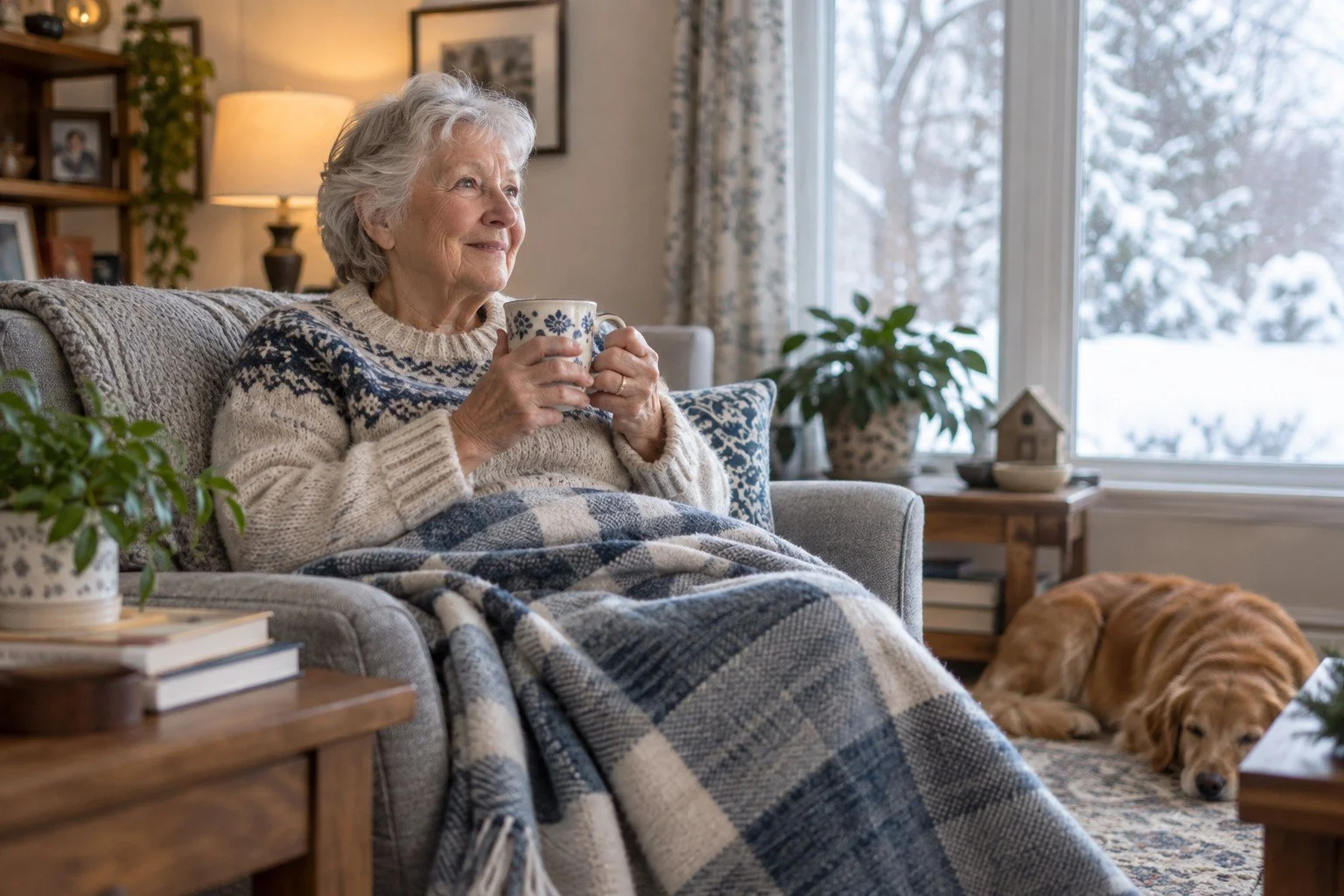
Extra blankets can help someone stay warm while sitting, but keep them arranged so they do not trail across the floor. A blanket over the legs may be more comfortable than asking someone to wear a bulky coat indoors. Use space heaters with particular care: keep them away from bedding and curtains, follow the manufacturer’s instructions, and never leave one running unattended. Keeping warm should never come at the expense of safety, so take care to reduce fire hazards when using space heaters.
Dress for Cold Weather Before Heading Outside
Getting dressed for colder temperatures can be challenging when extra layers feel uncomfortable or are difficult to put on. Lay out warm clothes in the order they go on, and offer calm help with each item. Comfortable layers, a coat, gloves, and a covering for the head protect exposed skin. Check that sleeves and gloves allow the person to move and hold on to a railing.
In extreme cold, dress warmly even for a short trip to the car. Pay attention to whether clothing is wet after time outdoors. Damp socks or gloves can draw away warmth, so help your loved one change promptly and stay dry. If they resist a particular item, try a different fabric or fit rather than letting an uncomfortable coat turn every outing into a struggle.
Help Older Adults Walk Safely in Snowy Conditions
Snow and ice can make even a short walk outside slippery. Before your loved one goes out, clear and treat the route from the door to the car or sidewalk. Make sure steps are clear of ice, and plan outings during daylight whenever possible so you can both see the path clearly.
Encourage shoes with good traction and have the person wear boots that fit securely. Loose boots can affect balance, while wet soles can make indoor floors slippery. Keep an absorbent mat near the entrance and help remove snowy footwear before walking farther into the house.
When conditions are icy, consider whether the trip can wait. If it cannot, allow extra time to cross the parking lot without rushing, and offer the person an arm for support if they need help with balance. Moving at a comfortable pace can reduce the risk of falls.
Watch for Warning Signs of Hypothermia
Hypothermia occurs when body temperature falls too low. It can develop outdoors during severe weather, but it can also happen inside a house that has become too cold. Shivering is one possible sign, but also watch for cold skin, unusual sleepiness, slowed movements, or shallow breathing. A person with Alzheimer's disease may seem more confused than usual or have difficulty explaining their symptoms.
If you suspect hypothermia, call 911 immediately. While help is on the way, move the person somewhere warmer if it is safe to do so, remove any wet clothing, and cover them with a dry blanket.
Offer Food and Fluids Throughout the Winter Months
A person may drink less during the colder months because they do not feel as thirsty as they do in warmer weather. Keep water within reach and offer drinks regularly. Warm beverages, such as tea or broth, can be appealing on a cold day; check that they are a comfortable drinking temperature before serving them.
Keep meals familiar and easy to manage. If your loved one eats less than usual, notice whether they are having trouble preparing food, sitting down for meals, or using utensils. Regular food and fluids support health throughout the winter months, especially when illness or a disrupted routine makes daily care more difficult. Speak with their healthcare professional if eating or drinking changes significantly.
Prepare for Severe Weather Before Temperatures Drop
Power outages and blocked roads are easier to handle when essential items are ready in advance. Keep a bag with a medication list, necessary medicines, contact information, spare warm clothes, and other items your loved one uses each day. Store drinking water and food that does not require cooking. Check flashlight batteries and keep a charged phone available for weather updates.
Decide who can check on your loved one if you cannot reach the house during bad weather. If the heat fails, do not wait for the indoor temperature to fall sharply before arranging somewhere warm to go. A change of location may leave a person with dementia confused, so bring familiar items and explain the move in simple terms.
Include the person living with dementia in emergency planning as much as they would like to be involved. Share the plan with families and anyone else who regularly provides care, so they know where supplies are kept and whom to call.
Make Winter Care Easier to Sustain
Winter safety takes steady attention, particularly when a loved one needs help with dressing, meals, or changes to their routine. The colder months can add to the demands of caregiving, but support is worth considering whenever caring for your loved one at home becomes difficult.
Lakewood Memory Care and Assisted Living in Brookfield offers person-centered memory care, assistance with daily activities, meals, and short-term respite stays. Our approach follows each resident’s lifelong routines while providing health monitoring and 24/7 on-call nursing support. To learn whether Lakewood is a good fit for your loved one, get in touch with our team to schedule a tour.
Frequently Asked Questions
1. What is carbon monoxide poisoning, and why is it a winter concern?
Carbon monoxide is a gas you cannot see or smell. It can build up when fuel-burning equipment is used improperly, particularly during a power outage. Symptoms such as headache, dizziness, or confusion may be difficult for a person with dementia to explain. Keep a working carbon monoxide detector in the house, run generators outdoors and away from doors and windows, and do not use a charcoal grill or gas oven for indoor heat. If the detector sounds, take everyone outside and call emergency services.
2. Should families ask about vitamin D when there is less sunlight?
Yes, particularly if your loved one spends little time outdoors during the winter. Vitamin D is important for bone health, but a supplement is not automatically needed or appropriate for everyone. Ask their healthcare professional whether their diet, medications, and health history call for a change.
3. What should I do if my loved one slips but says they are unhurt?
Help them stay still for a moment and check for pain, difficulty moving, or a head injury before trying to get them up. Seek urgent medical help if they hit their head, cannot bear weight, seem newly confused, or have significant pain. Tell their healthcare professional about a fall even when there is no obvious injury, so they can advise whether further assessment is needed.
4. How can I make short winter outings less distressing?
Choose a familiar destination and leave enough time to move at your loved one’s pace. Explain where you are going just before you leave, rather than giving repeated reminders far in advance. If an outing is optional and snowy weather is making the trip difficult, another day may be more comfortable.
5. How does Lakewood help residents stay engaged during the winter months?
When cold weather limits time outdoors, residents can stay safely engaged in Lakewood’s secure community. Its Montessori-based memory care program offers opportunities for physical activity, sensory engagement, and social connection, with activities shaped around each person’s interests and experiences.